Company
Duration
#
UX
#
Research
Workshop - Search
Here is a short example of the Marvel process in action, this was completed as a series of short 1-2 hour workshops within a single week. Using elements of design thinking, Google sprints, etc.
Role: Principal IC, facilitating and leading a structured, cross-functional workshop process to define search strategy and direction.


Workshop
Cross-functional team workshopping in Miro
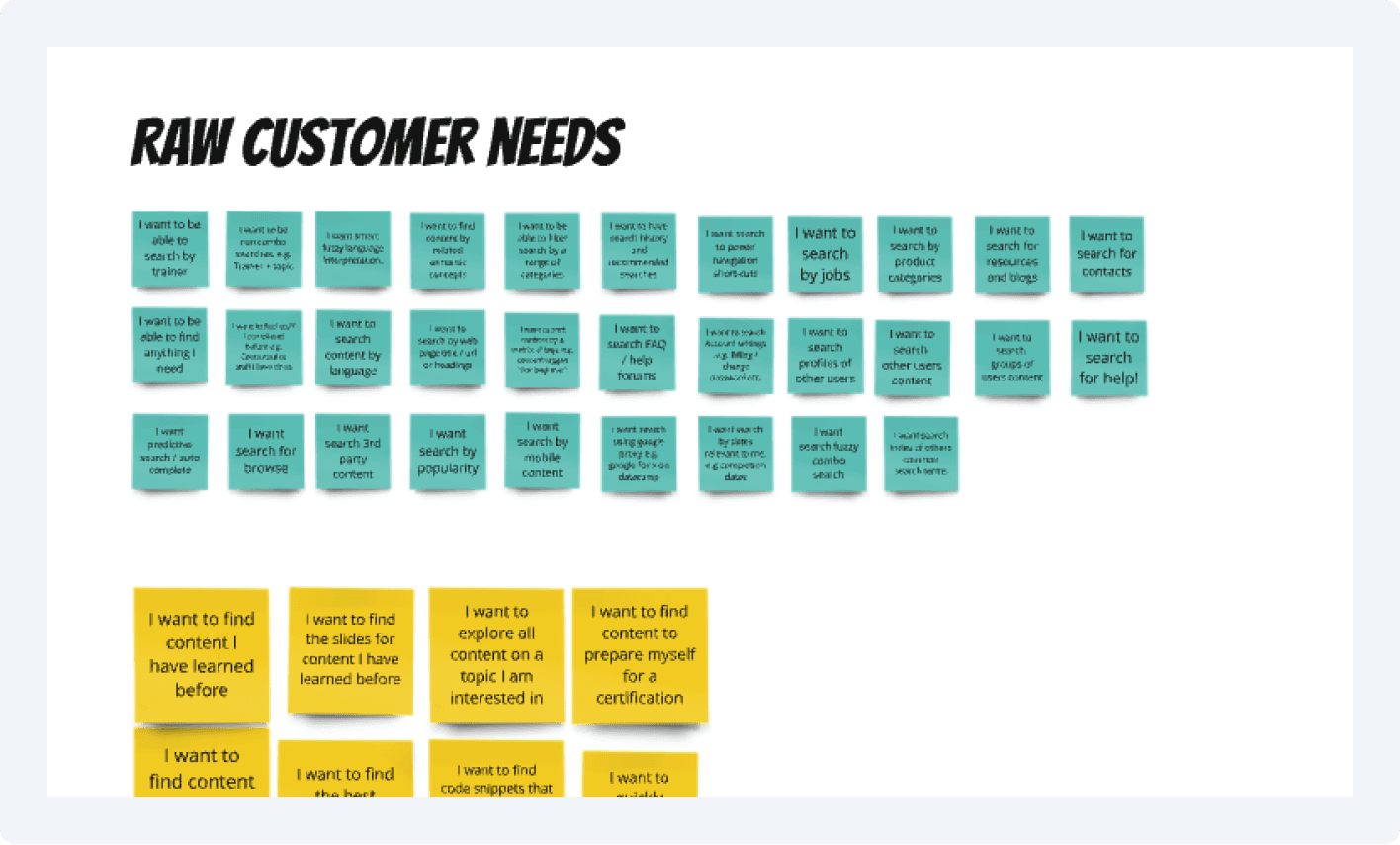
Step 1. Brainstorm Customer Needs
Full team completes a brainstorm of all the possible needs a customer has relating to the problem we are trying to solve. In this example what do users need from a search function?
This helps us to better understand the problems we are trying to solve and decide on the most important parts of the problem.
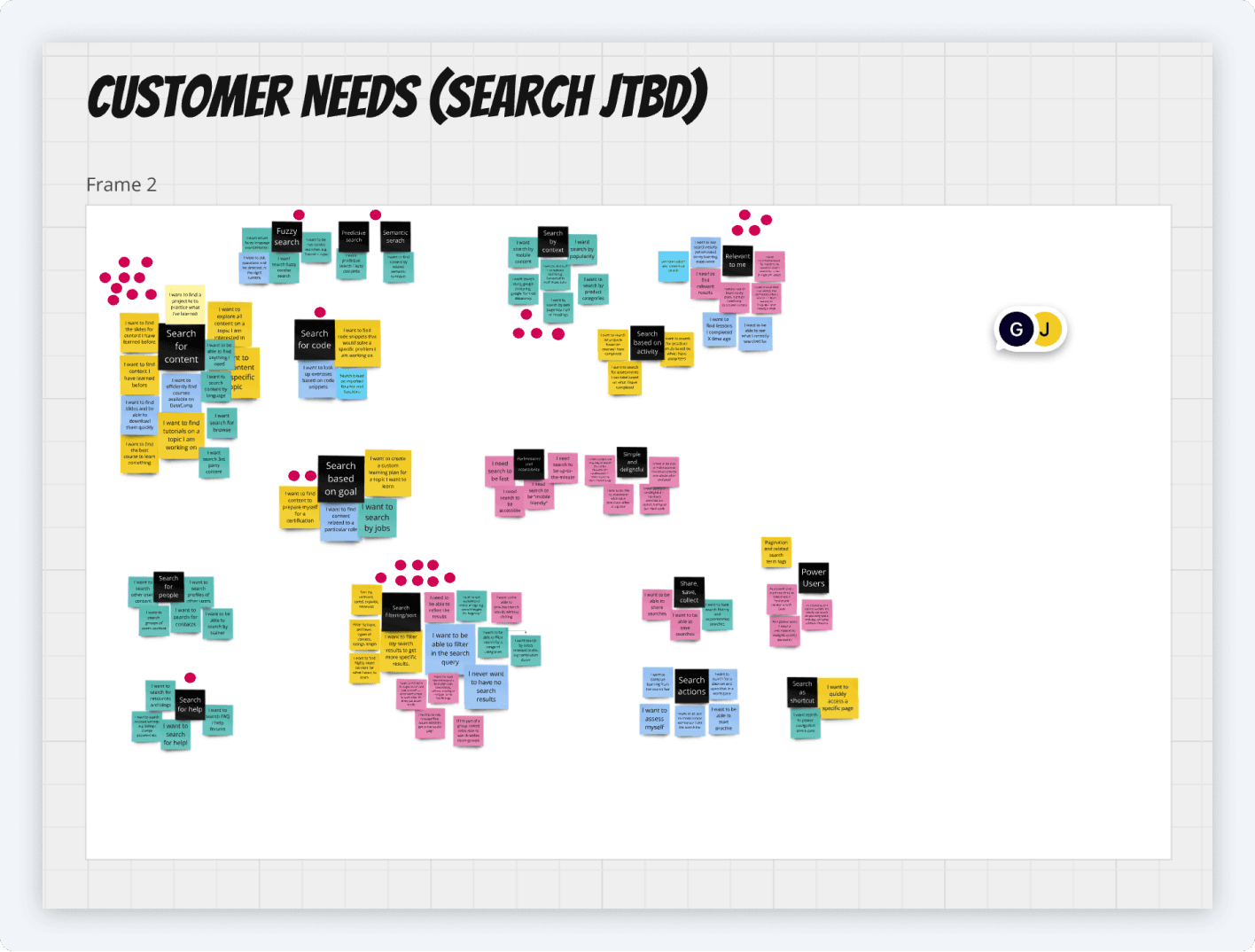
Step 2. Affinity Mapping and Voting
Collect the needs into common themes and vote on importance to ensure we focus on the right things; this helps when developing the MVP (Skateboard) ensuring the most valuable features are delivered first.
Step 3. Review Competitor Solutions (Sometimes this is the first step)
Each participant reviews a solution from a competitor in the same problem space and shares findings with the team, what is good, bad and should be borrowed.
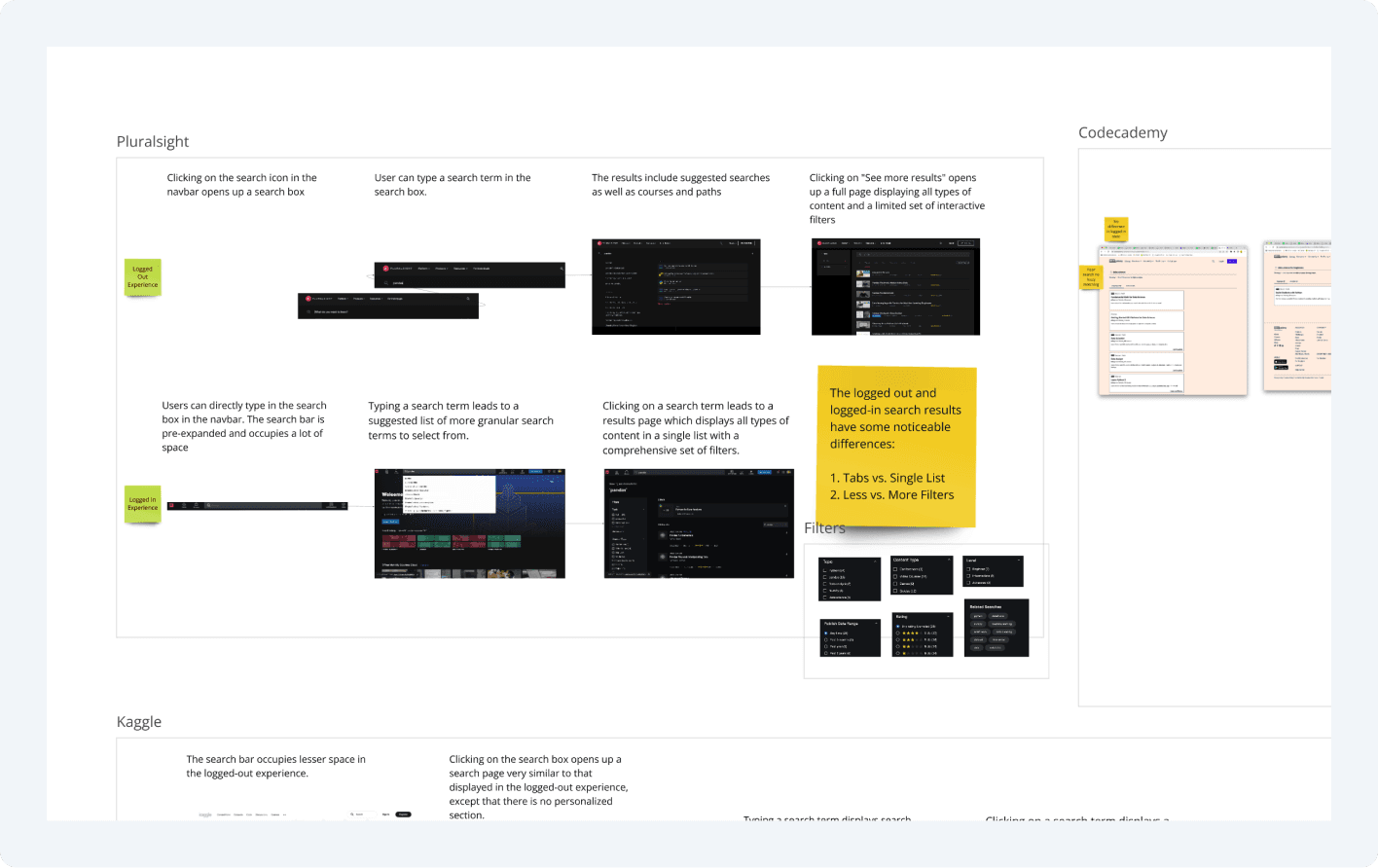
Competitor review
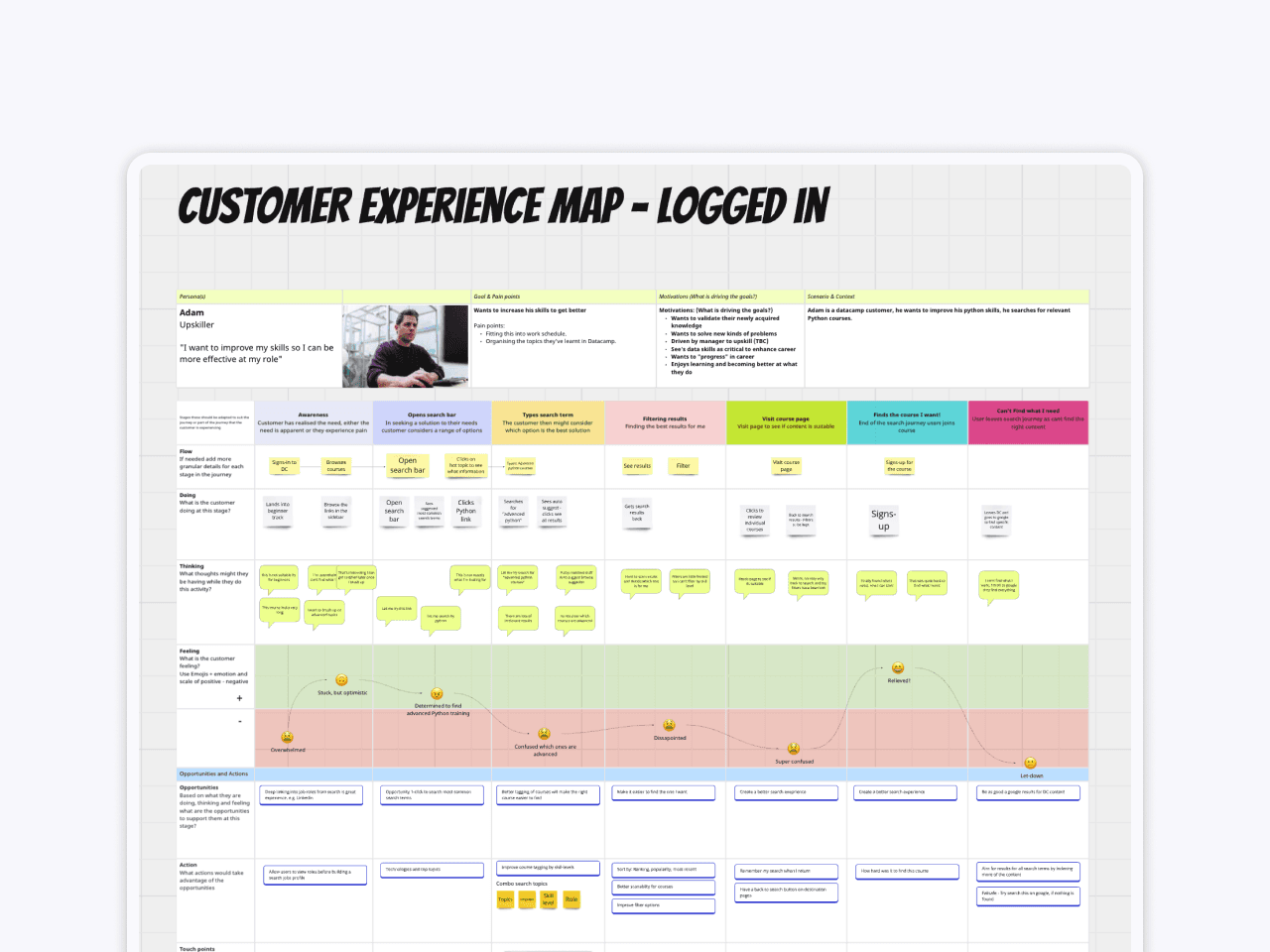
Step 4. Create a Customer Journey Map
Picking a person and crafting a typical scenario we flesh out a customer journey to find the opportunities and pain points during the search process. We also use this journey to think about the pre- and post-journeys, and to some extent red paths, e.g. if a customer didn’t find their solution they might then go to google and search there.
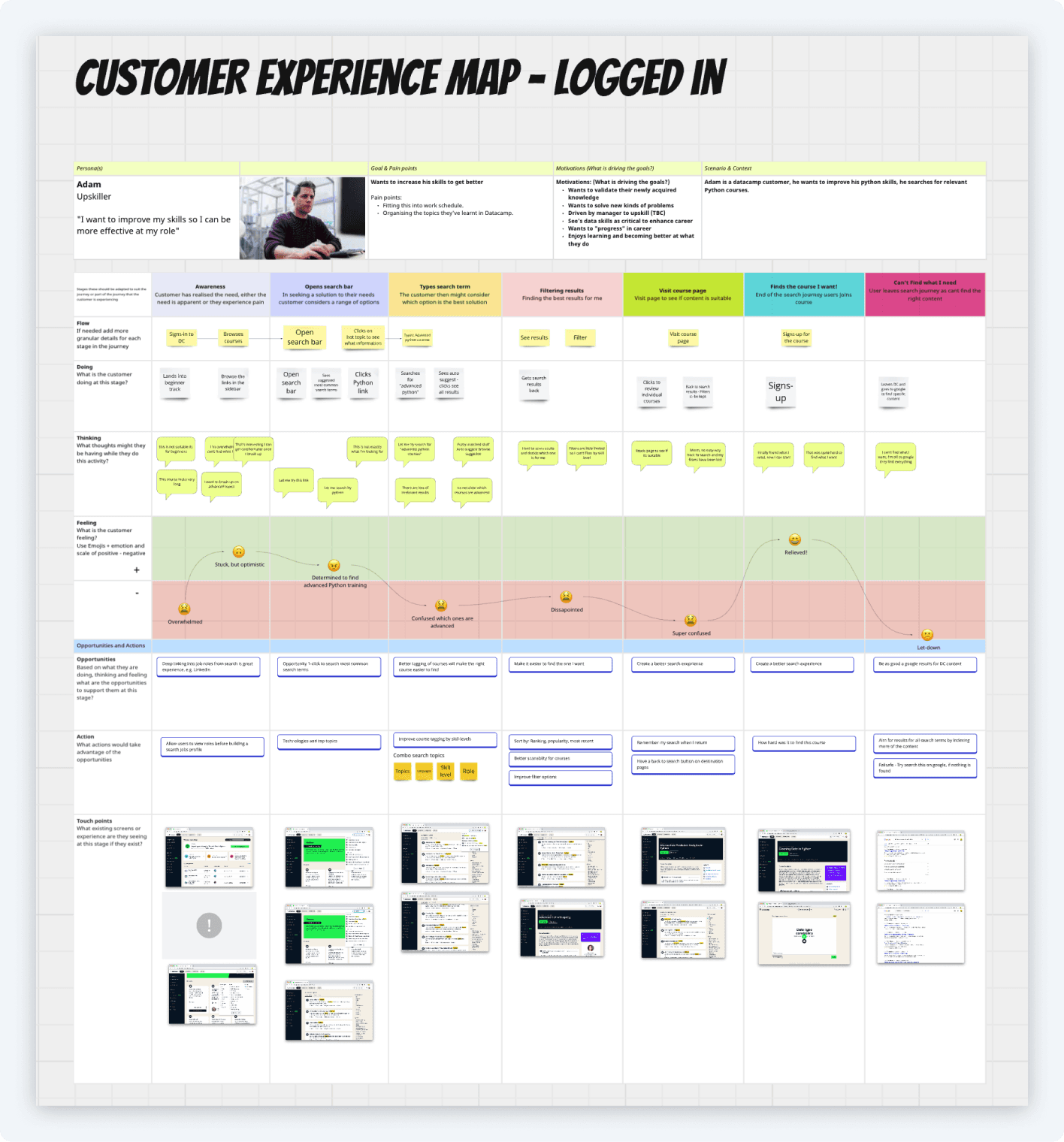
Step 5. Sketching Ideation Workshop
Using Crazy 8’s to warm up then a longer sketching session 30-40 mins we captured each participant’s ideas as sketches, each person has 3 mins to explain their ideas to the group.
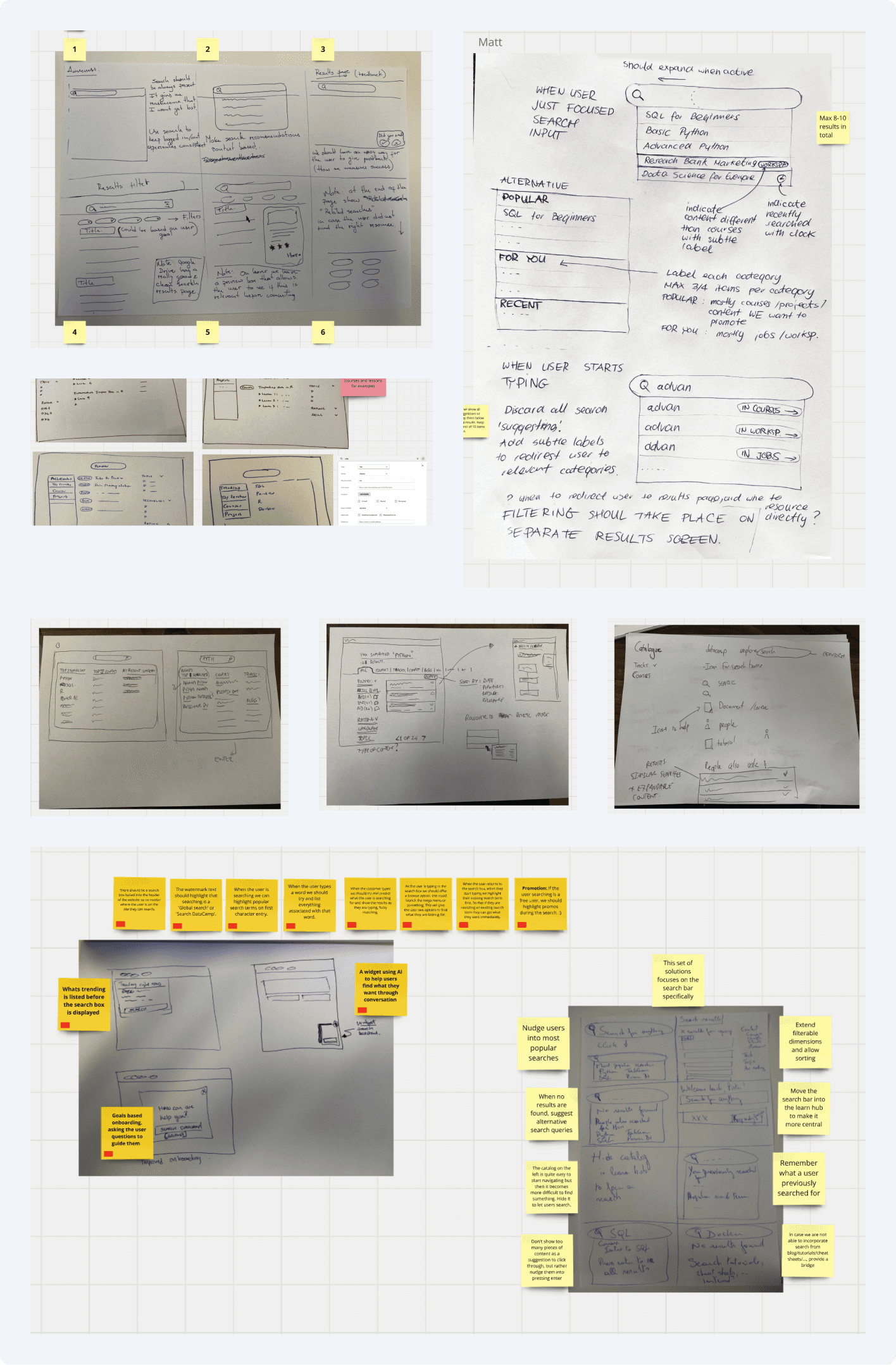
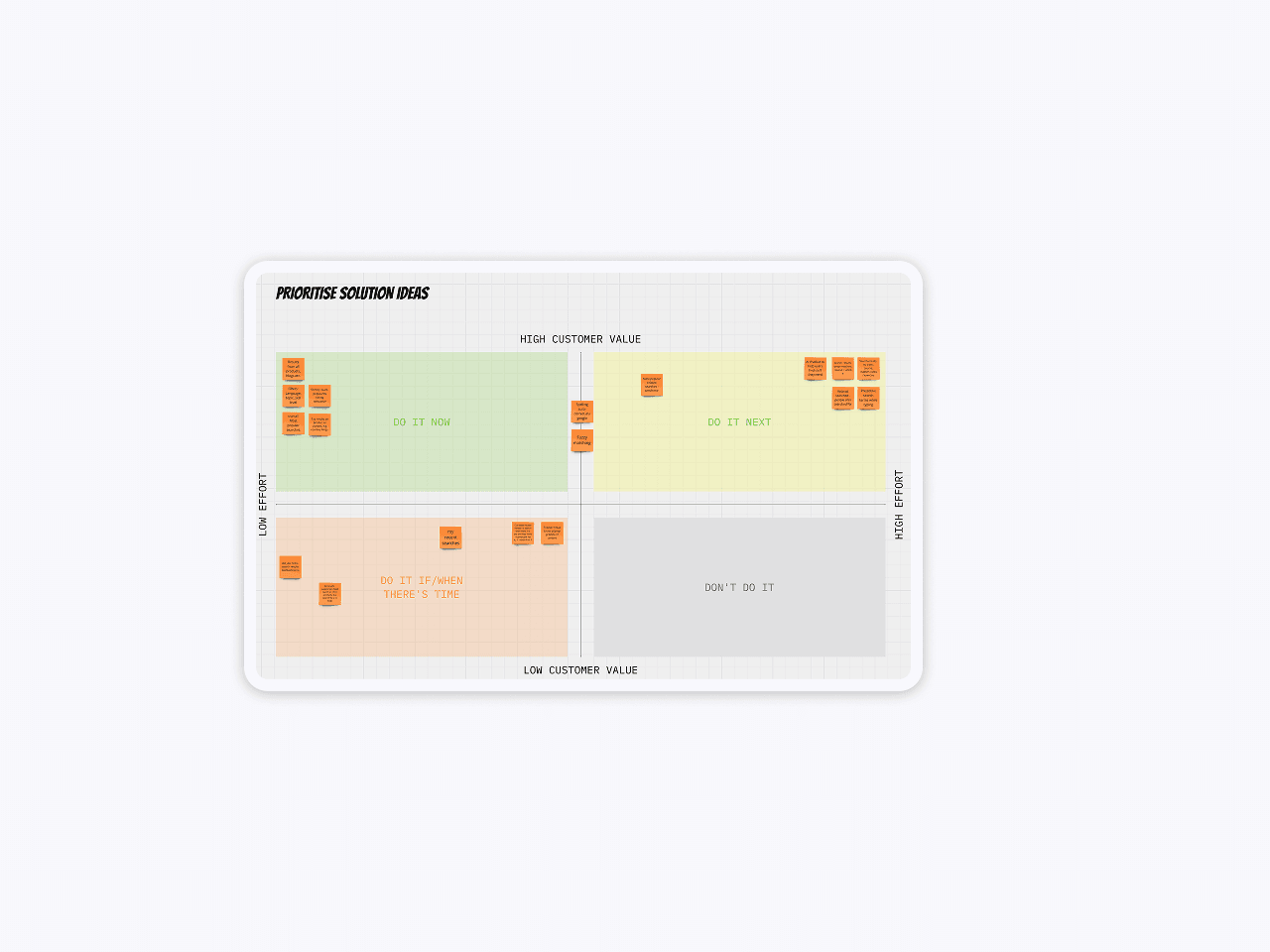
Step 6. Feature prioritisation
Based on a long list of all the features we like we crafted a strategy for roll-out based on cost versus value to users.
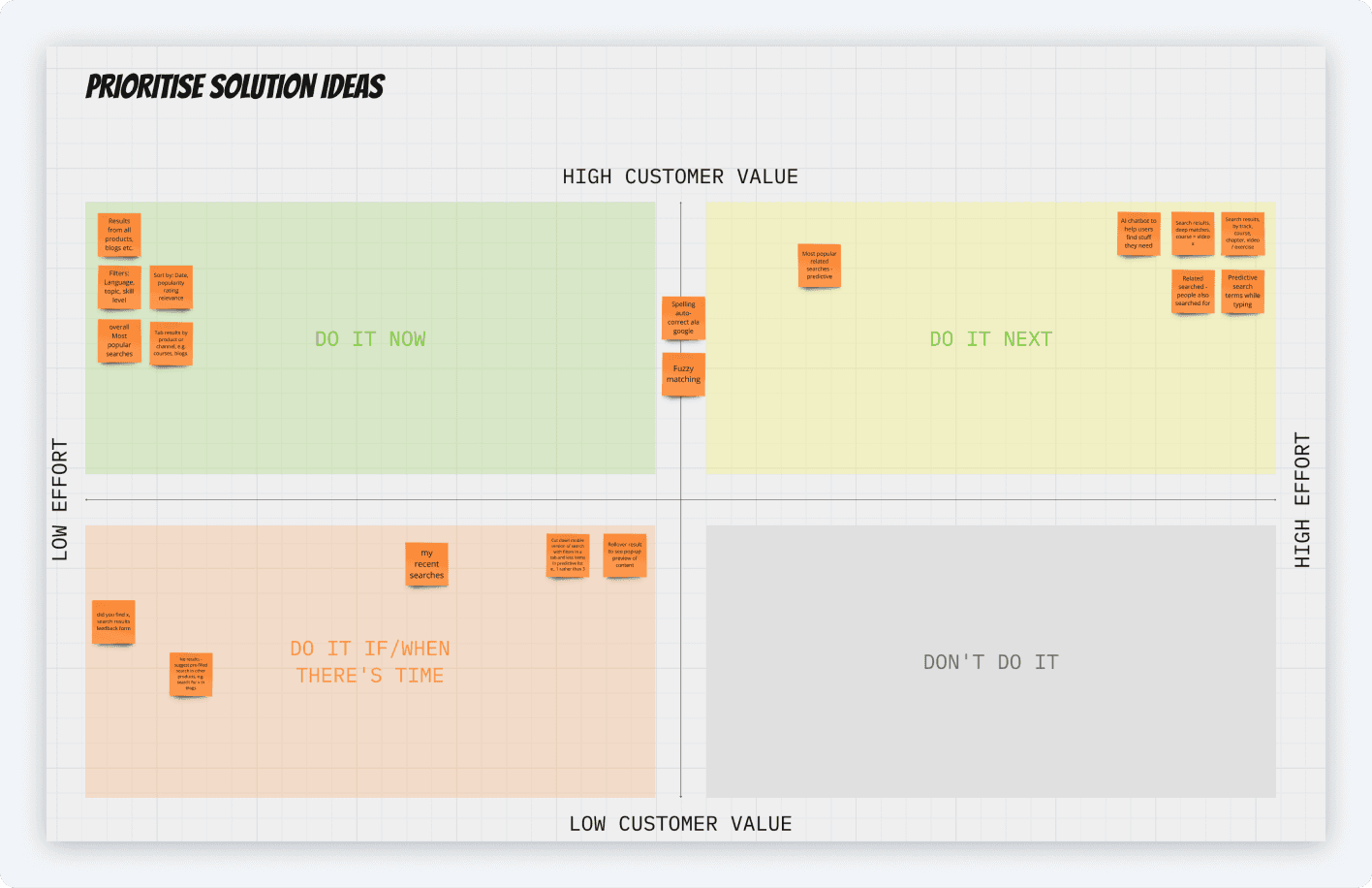
Prioritisation matrix
Step 7. Into Design
After these stages the design work then moves into higher fidelity design work, taking the best idea from our sketches together with the MPV roll-out plans the full solution designs are crafted in Figma, once these have had a few reviews with the team. The final stage is to create the reduced MVP version for first stage development.

Outcome
Rapidly aligned product, design, and engineering around a shared understanding of user needs and search priorities within a single week.



DISCOVER MORE